


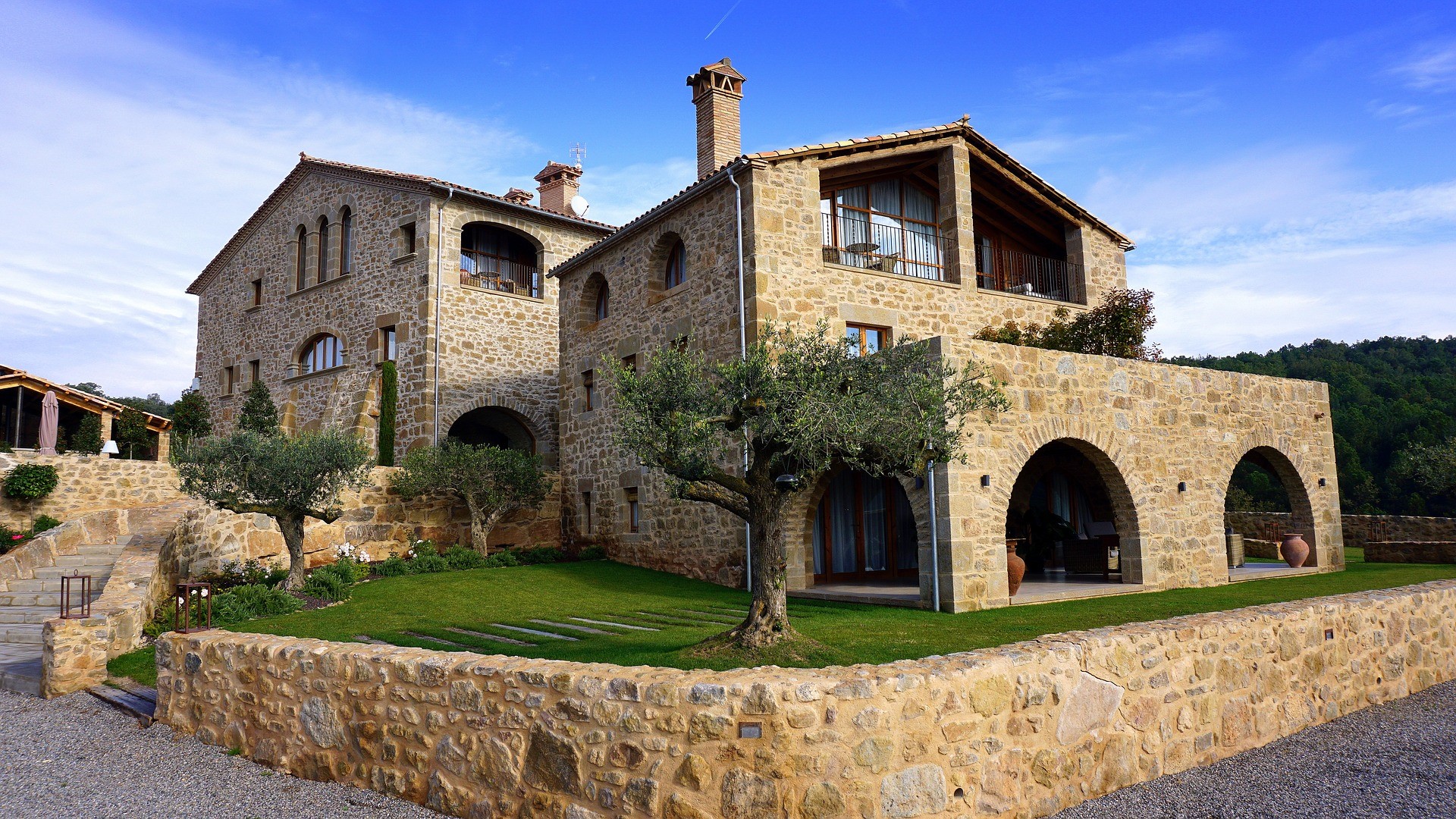
As I planned my first trip to Italy years ago, I had no intention of staying at a bed and breakfast. I was stuck in my Hilton ways. Yes, I was excited for my first Italian adventure, but I still wanted the consistency of a brand I knew.
As I learned, Italy offers numerous types of accommodations — from the chains you know like Marriott and Hilton to rental villas, apartments and condos. Plus, agriturismos (or “farm-stays”) offer a unique experience in the countryside. But perhaps Italy’s most common accommodation is the bed & breakfast. So, on my first trip, I did venture out of my Hilton comfort zone to experience the Italian bed and breakfast. My travel world was never the same again.
As it turns out, my misconceptions of B&Bs were many. I wondered … Do I really want to stay in the home of someone I don’t know? Will I have my own bathroom? Can I come and go as I please? What about when I need something at 2 a.m.? No front desk! And as introvert who does not want to deal with other guests, would I have any choice but to chat it up with strangers?
Not all B&Bs are created equal, but in Italy the majority have an excellent reputation. Knowing what to look for and what questions to ask can create an experience of a lifetime. In my experience, B&Bs are very private — and quieter than most hotels. I have never shared a bathroom (though such B&Bs do exist), and — let’s be real — the 2 a.m. call to the front desk can usually wait until morning.
And my introverted self was pleased to find that it’s usually easy to regulate how much or how little interaction you have with the other guests. Hosts typically get a feel for your preferences and try to accommodate them. To my surprise, though, I tend to thoroughly enjoy my fellow guests. The conversation is light and focused on the previous day’s activities and adventures. You often learn something you can put to use in your own travels. So, after overcoming my fears of B&Bs I realized there are several great reasons to stay in one. Here are five reasons to strongly consider an Italian bed and breakfast.
1. The Ultimate Concierge – Owning a B&B is no simple task; most are managed by a family. Cooking, cleaning and maintaining a B&B is a daily grind; plus, handling reservations, marketing and Italian bureaucracy is a daunting task. On top of this you cannot lose sight of what is most important — the guest’s experience. This is where many Italian B&Bs are simply amazing.
The best B&Bs in Italy may have hundreds of positive reviews without a negative word. How do these families work with so many personalities, cultures and languages to provide a consistent high-quality experience? When staying at a good B&B, you don’t have a concierge who has hundreds of guests to assist, so you usually have a more intimate relationship. Especially during breakfast you can discuss your plans for the day, get questions answered and receive dinner recommendations. If I am not feeling confident with my shaky Italian I might ask for a phone call to be made on my behalf for dinner reservations or transportation.
Venice can be a maddening city in which to find a specific address, but I once had a B&B owner draw out detailed maps that were so critical in finding a few special spots that I still have and use these maps whenever I’m in Venice.
2. Real Travel Experiences – An owner of a B&B can be a great help with logistics, but listen carefully to the hidden insights they provide. If you are planning to go to a Tuscan hillside town, don’t trust Google — trust your B&B owner. I was once given an alternate route from my B&B to San Gimignano. San Gimignano is an outstanding place to spend a day or more, but what I remember most about my visit this day was the drive. Quiet rolling roads surrounded by vineyards, poppies and amazing Tuscan landscapes. It was easy to stop and take photos and enjoy the views and smells without constant traffic. Only a local would know this route.
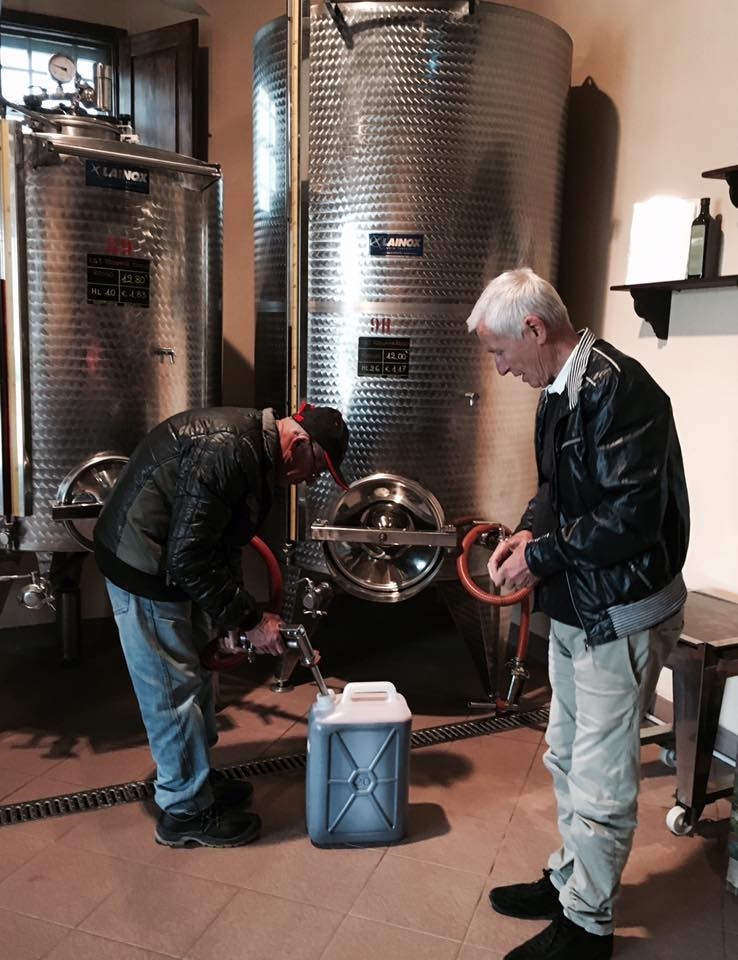
On another occasion, I asked a B&B owner where he got his wine. Instead of answering the question he showed me. We drove to a famous local winery with 5-liter jugs and filled them as if we were at a gas station. Then, we went back to the B&B, where we capped the wine in sealed glass containers. That is not an excursion you can find on TripAdvisor.
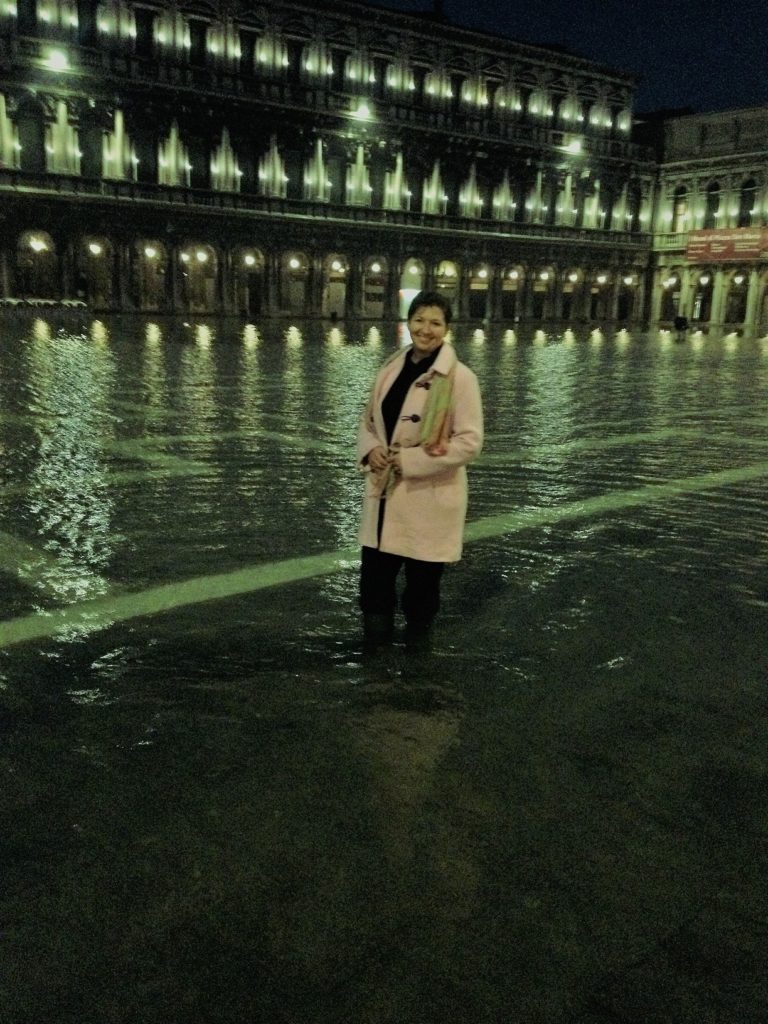
 In Venice, my B&B provided rain boots and instructions to get up at 6 a.m. and go to St. Mark’s Square. Getting up at 6 a.m. is foreign to me on vacation, but we took the boots and the advice. We experienced what is called the Acqua Alta — an occasional phenomenon where Venice experiences a very high tide and flooding. We walked into St. Mark’s Square joined only by a few photographers and water to just below our knees. I am not sure what was more spectacular — seeing St. Mark’s Square empty or seeing the lights of the square glisten off the water.
 3. Connection to the Land or Property – At a hotel you deal with employees and perhaps managers. At a B&B you usually deal with a family. One question I always ask my B&B host is: “How long has your family owned this home”? Sometimes I receive a generic answer; perhaps it was purchased recently as an investment. Often, though, the question leads to a prideful history of the property and the importance of the home or property to the family. Perhaps the story goes back generations and details the love story of long-lost grandparents. Perhaps you will be staying in the room that the host was raised in. Regardless, this connection to the home comes out in your host. Their home, land and community are special to them, and they want you to feel it is special as well. I’m sorry, but no matter how nice the Hilton is, it will not have that energy.
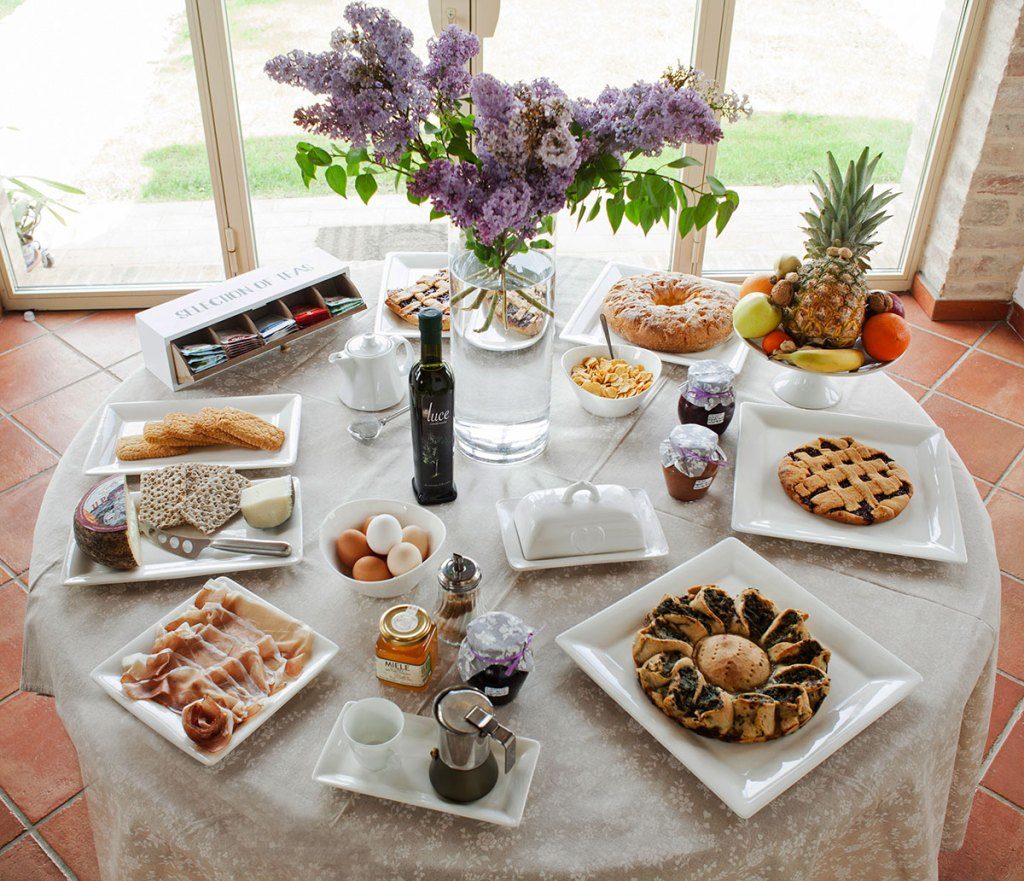
4. The Food – All B&Bs offer breakfast. Some may be as simple as prepackaged bread items and self-serve coffee or juice. Most high-quality B&Bs will offer local breads, pastries and cakes along with coffee, tea or juice. Occasionally you may be offered eggs or yogurt. Don’t expect a typical American breakfast, but you can expect that most of the breads, pastries and jellies are either homemade fresh or purchased daily from the local bakery.
 You might find that your B&B offers dinner. This is something I typically highly recommend taking advantage of. I have eaten at terrific restaurants in Italy, but my best and most memorable meals have been at B&Bs. In Cinque Terre I was once offered a dinner with our B&B hosts that included amazing lasagna, fried zucchini flowers and fresh fish that the owner personally caught that morning. One of my favorite B&B owners has written Italian cookbooks and occasionally cooks for guests. It is an event with family recipes, great local wine and usually family friends from around Italy and beyond. This is a true experience where you immerse yourself in the Italian culture, and if you are lucky you build a friendship you will remember forever.
5. Value – Italian B&Bs range in price. While some are opulent in amenities and price, most are more down to earth, offering excellent accommodations and a great value for what you receive. You most often will not deal with resort fees, parking fees or Wi-Fi fees. It is usually a straightforward nightly rate with a small local tax.
Regardless of whether the B&B is in a city center or in the countryside, it is usually significantly less expensive than a comparable hotel. If you are looking for a B&B in a city center with views of a piazza and church bells in the distance, you can find that. If you are looking for solitude in the country with your quiet interrupted occasionally by a rooster, a B&B can be a perfect fit for that as well. Most importantly, if you are looking to immerse yourself into Italian culture and life, a bed and breakfast is a choice second to none.
At Your Italian Dreams, our mission is to create an Italian vacation around your dreams! If a bed and breakfast is the right choice for you, we have a broad selection of excellent choices. If a hotel or rental is best, then we can assist as well. We’re here to make your dream a reality.